
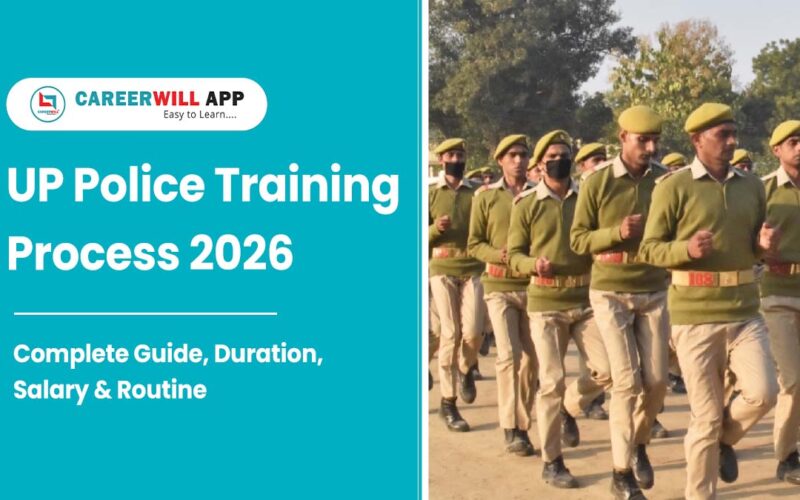
In this blog, we will explain the complete UP POLICE TRAINING PROCESS in a clear and structured manner so that candidates understand what happens after selection.
Many aspirants focus only on clearing the written exam and physical tests, but the real journey begins after final selection. Training is the stage where selected candidates are transformed into disciplined, skilled, and responsible police personnel.
The UP POLICE TRAINING PROCESS is designed to build:
- Physical fitness and endurance
- Mental strength and discipline
- Knowledge of law and procedures
- Practical policing skills
- Leadership and field readiness
If you are preparing for UP Police recruitment or have recently been selected, this guide will help you understand what to expect during training, how long it lasts, and how it shapes your future career in the police department.
UP Police Training Process – Overview
The UP POLICE TRAINING PROCESS begins after a candidate successfully clears all stages of selection, including the written exam, physical tests, document verification, and medical examination. Once appointed, candidates are sent to designated police training centers across Uttar Pradesh.
Training is not just about physical drills. It is a structured program designed to prepare recruits for real-life policing responsibilities. The process combines classroom learning, physical conditioning, practical exercises, and discipline-building activities.
Below is a clear and structured chart explaining the complete UP POLICE TRAINING PROCESS from joining to final posting.
UP POLICE TRAINING PROCESS – Overview Chart
| Training Stage | Focus Area | What Happens in This Stage |
| 1. Reporting & Joining | Initial Formalities | Document verification, uniform measurement, hostel allotment, orientation briefing |
| 2. Basic Classroom Training | Legal & Theoretical Knowledge | Study of IPC, CrPC, Evidence Act, Police Rules, Constitution, Human Rights, ethics and conduct |
| 3. Physical & Drill Training | Fitness & Discipline | Daily PT, running, parade drills, weapon basics, stamina building exercises |
| 4. Weapons & Tactical Training | Operational Skills | Firearms training, crowd control methods, self-defense, use of force guidelines |
| 5. Practical & Field Training | Real-World Policing | Crime scene handling, investigation procedures, traffic control, communication systems |
| 6. Internal Assessments | Performance Evaluation | Written tests, physical efficiency tests, weapon handling tests, discipline evaluation |
| 7. Passing Out Parade | Completion Ceremony | Final parade ceremony after successful training completion |
| 8. District Posting | Field Deployment | Appointment and posting in assigned police station/unit |
Where Does UP POLICE TRAINING PROCESS Take Place? (Training Centres & Duration)
After final selection, candidates are sent to officially designated police training institutes across Uttar Pradesh. The allocation of training centres is decided by the Uttar Pradesh Police authorities based on batch size, post, and administrative requirements.
The UP POLICE TRAINING PROCESS is conducted in government police academies and training colleges that are equipped for academic instruction, physical drills, and tactical preparation.
1. Major UP Police Training Centres
Some of the main training centres where recruits are sent include:
- Police Training College, Moradabad
- Recruit Training Centre, Sitapur
- Police Training School, Unnao
- Police Training School, Gorakhpur
- Police Training School, Meerut
Final training location depends on official allotment and available capacity at the time of joining.
2. Duration of UP Police Training
The duration of the UP POLICE TRAINING PROCESS varies depending on the post:
• For Sub-Inspector (SI)
- Approximately 9 to 12 months
- Includes classroom study, physical drills, weapon training, and field exposure
• For Constable
- Approximately 6 to 9 months
- Focus on discipline, law basics, physical training, and operational skills
• Field Attachment
- After institutional training, supervised field training may be provided
- Helps recruits understand real police station functioning
3. Facilities Provided During Training
During the training period, recruits are provided with:
- Hostel accommodation
- Mess facilities
- Uniform and basic kits
- Physical training equipment
- Medical assistance
Physical Training Routine (Daily Drill, Running, Fitness Standards)
Physical conditioning is one of the most important parts of the UP POLICE TRAINING PROCESS. The goal is to build stamina, strength, discipline, and mental toughness. Training is structured and strict, and recruits are expected to maintain high fitness standards throughout the program.
Below is a clear breakdown of the daily physical routine followed during training.
1. Daily Morning Physical Drill
Every training day usually begins early in the morning.
• Physical Training (PT) Parade
- Warm-up exercises
- Stretching routines
- Push-ups, sit-ups, squats
- Core strength exercises
• Parade Drill Practice
- Marching drills
- Saluting practice
- Formation discipline
- Synchronization and coordination
These drills build discipline, posture, and team coordination.
2. Running & Endurance Training
Running is a compulsory part of the daily routine.
• Long-Distance Running
- 4 to 5 km for male recruits
- 2 to 3 km for female recruits
- Timed runs to improve speed
• Sprint Practice
- Short-distance speed training
- Interval running
• Stamina Building
- Gradual increase in endurance level
- Focus on breathing control
This prepares candidates for Physical Efficiency Test (PET) standards.
3. Strength & Fitness Conditioning
Recruits undergo structured strength-building exercises.
• Bodyweight Training
- Push-ups
- Pull-ups
- Planks
- Burpees
• Obstacle Training
- Wall climbing
- Rope climbing
- Balance beams
- Crawling drills
• Group Fitness Activities
- Squad-level physical competitions
- Endurance challenges
These activities improve agility, coordination, and overall physical readiness.
4. Fitness Standards Maintained During Training
Recruits must consistently maintain required standards.
• Timed Running Targets
• Proper Body Mass Index (BMI)
• Chest expansion standards (for males)
• Height and posture maintenance
• Medical fitness checks
Failure to maintain physical standards may result in warnings or disqualification.
Classroom Training: Law, IPC, CrPC & Police Procedures
Classroom instruction is a core part of the UP POLICE TRAINING PROCESS. While physical fitness prepares recruits for fieldwork, legal knowledge prepares them to act lawfully, responsibly, and confidently in real situations.
During this phase, recruits are trained in legal subjects, police procedures, documentation methods, and ethical conduct. The aim is to ensure every officer understands the law before enforcing it.
1. Indian Penal Code (IPC)
The Indian Penal Code forms the foundation of criminal law in India.
• Understanding types of offences
• Classification of crimes (bailable, non-bailable, cognizable, non-cognizable)
• Punishments and legal consequences
• Sections related to theft, assault, murder, fraud, etc.
Recruits are taught how to identify applicable IPC sections in real-life cases.
2. Criminal Procedure Code (CrPC)
CrPC governs how criminal cases are handled.
• Arrest procedures
• FIR registration process
• Investigation steps
• Search and seizure rules
• Court procedures and charge sheets
This training ensures officers follow proper legal steps during investigations.
3. Indian Evidence Act
This subject focuses on handling evidence properly.
• Types of evidence
• Admissibility of evidence in court
• Witness examination rules
• Chain of custody maintenance
Improper evidence handling can weaken a case, so strict training is provided.
4. Police Rules & Departmental Procedures
Apart from national laws, recruits are trained in state police regulations.
• Uttar Pradesh Police Manual
• Departmental hierarchy
• Reporting structure
• Case diary writing
• Documentation and record maintenance
This builds administrative discipline and procedural accuracy.
5. Human Rights & Ethical Policing
Modern policing requires legal awareness and sensitivity.
• Human rights laws
• Use of force guidelines
• Custodial conduct rules
• Public interaction standards
• Gender sensitivity training
This ensures officers act responsibly and professionally.
Weapons Training and Field Practice
Weapons handling and field exposure are critical components of the UP POLICE TRAINING PROCESS. This phase ensures that recruits are not only physically fit and legally informed, but also operationally prepared for real-life policing situations.
The focus is on safe weapon handling, tactical awareness, and practical field application.
1. Weapons Training
Recruits are trained under strict supervision to handle service weapons responsibly.
• Introduction to Police-Issued Weapons
- Basic structure and functioning of firearms
- Safety rules and handling protocols
- Maintenance and cleaning procedures
• Firing Practice
- Target shooting at firing ranges
- Accuracy improvement drills
- Controlled firing techniques
• Safety and Discipline
- Proper storage and transport of weapons
- Trigger discipline
- Avoiding accidental discharge
Weapons training is conducted with high safety standards. Any negligence can lead to disciplinary action.
2. Tactical & Combat Skills
Apart from firearms, recruits are trained in tactical preparedness.
• Self-defense techniques
• Crowd control methods
• Riot management drills
• Shield and baton handling
• Formation-based response strategies
This training prepares officers for law and order situations.
3. Field Practice & Practical Exposure
Classroom knowledge is applied in simulated and real-world environments.
• Crime Scene Handling
- Securing the area
- Evidence protection
- Documentation procedures
• Investigation Basics
- Statement recording
- Case diary writing
- Coordination with senior officers
• Traffic & Public Order Management
- Road checking procedures
- Public interaction handling
- Emergency response practice
Recruits may also undergo supervised field attachment to police stations for real exposure.
4. Performance Evaluation
Throughout weapons and field training, recruits are assessed on:
• Accuracy and discipline during firing
• Tactical response efficiency
• Decision-making under pressure
• Adherence to safety protocols
Failure to meet standards may require retraining.
Medical Tests and Fitness Monitoring During Training
Medical supervision is an essential part of the UP POLICE TRAINING PROCESS. Physical strength alone is not enough. Recruits must remain medically fit throughout the training period to ensure they are capable of handling real policing duties.
Regular health checks and fitness monitoring help maintain discipline, prevent injuries, and ensure long-term operational readiness.
1. Initial Medical Examination
At the beginning of training, recruits undergo a detailed medical check-up.
• Full body physical examination
• Blood pressure and heart rate check
• Vision and eyesight testing
• Hearing assessment
• General health screening
Candidates must meet prescribed medical standards to continue training.
2. Regular Fitness Monitoring
Throughout the UP POLICE TRAINING PROCESS, physical condition is monitored continuously.
• Periodic weight and BMI checks
• Stamina and endurance assessment
• Running performance review
• Muscle strength evaluation
If a recruit fails to maintain required fitness levels, corrective training may be assigned.
3. Injury Prevention and Treatment
Since training includes physical drills and weapon practice, injuries may occur.
• Immediate medical attention for minor injuries
• Physiotherapy support if required
• Rest period under medical advice
• Monitoring recovery before rejoining physical sessions
Serious medical issues may require further evaluation.
4. Vision and Physical Standards Re-Check
Medical standards are not checked only once.
• Periodic eyesight verification
• Chest expansion checks (for males)
• Height and posture review
• Overall physical readiness evaluation
Recruits must maintain required standards until final completion.
5. Mental Health & Stress Monitoring
Police training is physically and mentally demanding.
• Stress evaluation
• Emotional stability assessment
• Counseling support if required
Mental fitness is considered as important as physical fitness.
Salary & Stipend During UP Police Training
One of the most common questions candidates ask about the UP POLICE TRAINING PROCESS is whether they receive salary during training. The answer is yes. Once a candidate officially joins training after final selection, they are treated as government employees and are paid as per the applicable pay scale.
However, certain allowances may vary during the training period.
1. Basic Salary Structure
For Sub-Inspector (SI) posts:
• Pay Level: Level 6 (as per 7th Pay Commission)
• Basic Pay: ₹35,400 per month
• Additional allowances as applicable
For Constable posts:
• Pay Level: Level 3
• Basic Pay: ₹21,700 per month
The exact amount may vary depending on post and government revisions.
2. Allowances During Training
During the UP POLICE TRAINING PROCESS, recruits generally receive:
• Basic Pay
• Dearness Allowance (DA)
• Other standard government benefits (as per rules)
However, certain field-based allowances may not be applicable until posting.
3. Deductions During Training
Some deductions are applied from the salary:
• Provident Fund (PF) contribution
• Income Tax (if applicable)
• Mess charges (if deducted directly)
Net in-hand salary may differ slightly after deductions.
4. Uniform and Accommodation
During training, recruits are provided:
• Hostel accommodation
• Uniform kit
• Basic training facilities
This reduces personal expenses during the training period.
5. Salary After Training Completion
After successful completion of the UP POLICE TRAINING PROCESS and district posting:
• Full allowances become applicable
• Field duty allowances may be added
• Annual increments apply as per government rules
What Happens After Completing UP POLICE TRAINING PROCESS?
Completing the UP POLICE TRAINING PROCESS is a major milestone, but it is not the end of the journey. Once recruits successfully finish training and clear all internal evaluations, they officially become active members of the Uttar Pradesh Police force.
Here is what typically happens after training completion.
1. Passing Out Parade
Before final deployment, recruits participate in a formal ceremony.
• Passing Out Parade is conducted at the training centre
• Senior officers inspect performance and discipline
• Certificates of completion are awarded
• Oath of duty and service is taken
This marks the official transition from trainee to serving police personnel.
2. Official Appointment & Posting Order
After training completion:
• Appointment letters are formally issued
• District or unit posting is assigned
• Reporting date to the allotted district is provided
Posting is decided based on administrative requirements.
3. Reporting to District Headquarters
Once assigned:
• Candidates report to the Superintendent of Police (SP) office
• Posting to a specific police station or unit is given
• Duty responsibilities are explained
This is the beginning of real field service.
4. Field Responsibilities Begin
Depending on the post, duties may include:
• Law and order maintenance
• Crime investigation assistance
• Patrolling and public safety duties
• Traffic control
• Crowd management
Performance in initial months is closely observed by senior officers.
5. Probation Period
After completing the UP POLICE TRAINING PROCESS, recruits generally serve a probation period.
• Performance is evaluated
• Discipline and conduct are monitored
• Reports are submitted by senior officials
Successful completion of probation confirms permanent service status.
6. Career Growth & Promotions
After joining active duty:
• Annual increments apply
• Departmental exams may be conducted
• Promotion opportunities open with experience
• Specialized units may offer advanced roles
Final Conclusion
The UP POLICE TRAINING PROCESS is not just a routine program after selection. It is a transformation phase where candidates evolve from aspirants into disciplined, capable, and responsible police personnel. From physical drills and legal education to weapons training, medical monitoring, and field exposure, every stage is carefully designed to prepare recruits for real-world policing challenges.
Training builds more than physical strength. It develops mental resilience, legal clarity, decision-making ability, leadership qualities, and professional discipline. The structured routine, strict standards, and continuous evaluation ensure that only fully prepared candidates move forward to active duty.
Once the training is completed, recruits step into real service with confidence, equipped with the knowledge, fitness, and discipline required to protect law and order. The journey does not end with the passing out parade. It marks the beginning of a long-term career filled with responsibility, growth, and opportunities for advancement.