
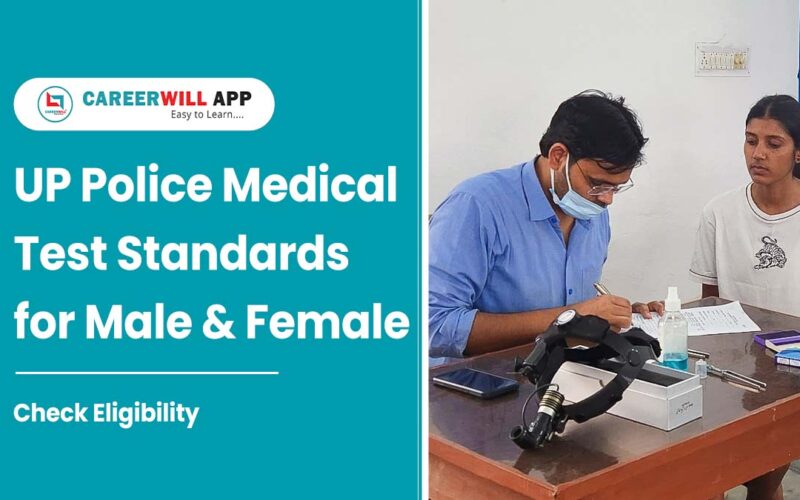
In this guide, we will explain the complete UP POLICE MEDICAL TEST process in a clear and student-friendly way so that candidates understand what happens at the medical stage of recruitment.
Many aspirants focus mainly on the written exam and physical tests, but the UP POLICE MEDICAL examination is equally important. Even after clearing all earlier stages, a candidate can be disqualified here if medical standards are not met. That is why knowing the requirements in advance can save you from last-minute surprises.
The UP POLICE MEDICAL TEST is conducted to ensure that selected candidates are physically and mentally fit for police duties. It checks vision, hearing, body measurements, overall health, and the absence of serious medical conditions that could affect performance in the field.
If you are preparing for up police recruitment or expecting your medical round soon, this guide will help you understand the tests involved, common rejection reasons, and how you can prepare to clear the medical stage confidently.
UP POLICE MEDICAL TEST – Detailed Overview Chart
Think of the UP POLICE MEDICAL TEST as the final confirmation stage of recruitment. It verifies whether a candidate is physically and medically fit for long-term police duty. Below is a complete overview chart that gives you the full picture at a glance — what is checked, who conducts it, and what standards apply.
UP POLICE MEDICAL TEST – Overview Chart
| Particulars | Details |
| Stage Name | UP POLICE MEDICAL TEST |
| Conducting Authority | Government Medical Board authorized by Uttar Pradesh Police Recruitment authorities |
| Purpose of Test | To confirm physical, visual, and medical fitness for police service |
| When It Is Conducted | After Written Exam → PST/PET → Document Verification |
| Exam Location | Government hospitals or designated medical examination centres |
| Medical Type | Physical fitness check + clinical examination + functional tests |
| Height Requirement (Male) | Gen/OBC/SC: 168 cm (≈5’6”), ST: 160 cm (≈5’3”) |
| Height Requirement (Female) | Gen/OBC/SC: 152 cm (≈5’0”), ST: 147 cm (≈4’10”) |
| Chest Requirement (Male) | Gen/OBC/SC: 79–84 cm, ST: 77–82 cm (minimum 5 cm expansion) |
| Weight Standard | Must be proportionate to height and within healthy BMI range |
| Eyesight Standard | Better eye 6/6 or 6/9, worse eye up to 6/12 acceptable, no color blindness |
| Hearing Standard | Must hear normal conversation clearly; no major hearing defect |
| General Health Check | Blood pressure, pulse, lungs, heart, bones, posture, deformities |
| Disease Screening | Hernia, hydrocele, chronic diseases, serious skin issues, orthopedic problems |
| Mental Fitness Check | Basic mental stability and absence of severe psychological disorder |
| Final Result Type | Fit / Unfit declared by medical board |
| Appeal Option | Re-medical may be allowed as per recruitment rules |
| Importance in Selection | Mandatory stage — failing medical leads to disqualification |
| Selection Process Order | Written Exam → PST/PET → Document Verification → Medical Test → Final Merit |
When Does the Medical Test Happen in the Selection Process?
The UP POLICE MEDICAL TEST takes place near the end of the recruitment process. It is conducted only after a candidate clears all earlier stages such as the written examination, physical tests, and document verification.
The purpose of placing the medical stage at the end is simple. The recruitment board first confirms eligibility, performance, and physical capability, and then finally checks whether the candidate is medically fit for long-term police service.
Physical Health Standards Required For UP Police
To clear the UP POLICE MEDICAL TEST, candidates must meet specific physical health standards that confirm they are capable of handling the demanding nature of police duties. These standards focus on body measurements, stamina-related indicators, and the absence of medical conditions that could affect field performance.
Below is a clear explanation of the main physical health requirements.
UP POLICE Physical Health Standards – Chart
| Parameter | Male Requirement | Female Requirement | Purpose |
| Height (Gen/OBC/SC) | 168 cm (≈5’6”) | 152 cm (≈5’0”) | Basic physical eligibility |
| Height (ST) | 160 cm (≈5’3”) | 147 cm (≈4’10”) | Relaxed category standard |
| Chest (Normal → Expanded) | 79 → 84 cm | Not required | Lung capacity & stamina |
| Weight | Proportionate to height | Same | Healthy BMI confirmation |
| Posture & Structure | No severe deformity | Same | Ensures mobility in field duty |
| General Health | Normal BP, heart, lungs | Same | Confirms long-term fitness |
Vision Test Requirements (Eyesight Rules Explained)
The eyesight check is one of the most important parts of the UP POLICE MEDICAL TEST. Since police duties involve patrolling, night work, reading documents, identifying suspects, and handling emergencies, clear vision is essential for safe and effective performance.
If a candidate fails the vision test, they may be declared medically unfit even after clearing all earlier stages. That is why understanding the eyesight rules in advance is very important.
UP POLICE Vision Test – Quick Chart
| Eye Check Type | Required Standard | Purpose |
| Distant Vision | Better eye 6/6 or 6/9, worse eye up to 6/12 | Ensures clear field visibility |
| Near Vision | Must read small text clearly | Important for documentation work |
| Color Vision | No color blindness allowed | Needed for signals, identification |
| Eye Health | No serious disease or defect | Confirms long-term functional vision |
| Corrective Lenses | Limited correction allowed (as per rules) | Ensures acceptable visual clarity |
Common Medical Conditions That Can Lead to Rejection
During the UP POLICE MEDICAL TEST, the medical board checks whether a candidate is fully fit for long-term police service. Even if you clear written, physical, and document stages, certain medical issues can still lead to disqualification.
Below are the most common conditions that may result in rejection.
Medical Rejection Reasons – Quick Chart
| Category | Examples of Disqualifying Conditions | Reason |
| Vision Issues | Color blindness, poor distant vision, eye disease | Affects field safety and performance |
| Hearing Problems | Hearing loss, chronic ear issues | Communication difficulty |
| Orthopedic Problems | Knock knees, flat feet, deformities | Limits physical mobility |
| Surgical Conditions | Hernia, hydrocele, incomplete recovery | May affect endurance and duty |
| Chronic Illness | Heart disease, uncontrolled diabetes, epilepsy | Long-term fitness concern |
| Skin/Infections | Severe skin disease, contagious illness | Health and hygiene risk |
| Mental Health | Serious psychological instability | Affects judgment and decision-making |
What Happens If You Are Declared Unfit? (Re-Medical Process)
Being declared unfit in the UP POLICE MEDICAL TEST does not always mean the end of your selection chances. In many recruitment cycles, candidates are given an opportunity to apply for a re-medical examination if they believe the decision was incorrect or if the issue is temporary and correctable.
Here’s how the process usually works.
UP POLICE Re-Medical Process – Quick Chart
| Stage | What Happens | Outcome |
| Initial Medical Result | Candidate declared Fit/Unfit | Determines eligibility status |
| Re-Medical Application | Candidate applies within deadline | Request reviewed by authorities |
| Re-Medical Exam | Fresh medical check by board | Parameter re-evaluated |
| Final Decision | Fit or Unfit declared again | Final selection confirmed or cancelled |
Documents Required for the Medical Examination
When you appear for the UP POLICE MEDICAL TEST, carrying the correct documents is just as important as meeting the medical standards. Without proper documents, you may not be allowed to undergo the medical examination, even if you are otherwise eligible.
To avoid last-minute problems, keep both originals and photocopies ready.
UP POLICE MEDICAL TEST – Documents Checklist Chart
| Document | Required? | Purpose |
| Medical Admit Card / Call Letter | Mandatory | Entry to medical examination |
| Photo ID Proof (Original) | Mandatory | Identity verification |
| Educational Certificates | Required | Confirms eligibility |
| Category Certificate | If applicable | Reservation verification |
| Domicile Certificate | If required | State eligibility proof |
| Passport Photos | Recommended | Record attachment |
| Medical Reports (if any) | Optional but useful | Clarifies medical history |
Tips To Prepare For The UP POLICE MEDICAL TEST
Preparing for the UP POLICE MEDICAL TEST is not about studying like an exam. It is about ensuring your body, vision, and overall health meet the required standards. A little preparation in advance can help you avoid rejection for minor and preventable reasons.
Below are practical tips that can help you clear the UP POLICE MEDICAL confidently.
1. Check Your Eyesight in Advance
Vision issues are one of the most common rejection reasons.
• Get an eye test done at a certified clinic
• Check distant vision, color vision, and eye health
• If you wear glasses, confirm your power is within allowed limits
• Avoid eye strain before medical day
If any issue exists, consult a doctor early.
2. Maintain Healthy Weight & Fitness
Weight should be proportionate to height.
• Avoid crash dieting before medical test
• Maintain balanced diet with protein and hydration
• Do light exercise and walking regularly
• Avoid sudden weight gain or loss
Doctors mainly check overall fitness and BMI balance.
3. Address Minor Health Issues Early
Small medical problems can cause unnecessary rejection.
• Treat skin infections or allergies
• Complete treatment for cough or breathing issues
• Get checked for hernia or minor swelling
• Keep medical prescriptions if under treatment
Do not ignore small health problems.
4. Sleep Well Before the Examination
Your physical condition on the day matters.
• Take proper sleep the night before
• Avoid late-night travel or stress
• Stay hydrated
• Eat light and healthy food
Fatigue can affect blood pressure and general appearance.
5. Carry Proper Documents & Medical Proof
Many candidates face issues due to missing papers.
• Keep all required documents ready
• Carry extra photographs
• Bring medical reports if you had surgery or treatment
• Keep spectacles if you use them
Being organized prevents unnecessary problems.
6. Avoid Last-Minute Panic Treatments
Do not try risky fixes just before the medical test.
• Avoid new medicines without doctor advice
• Do not attempt extreme dieting
• Do not try unverified eyesight remedies
• Stay calm and confident
Natural health and stability matter more than shortcuts.
Final Conclusion
The UP POLICE MEDICAL TEST is not just another step in the recruitment process. It is the final checkpoint that confirms whether a candidate is truly ready for the physical and mental demands of police service. Many aspirants lose their selection at this stage simply because they underestimate it or do not prepare in advance.
The good news is that the medical test is not meant to eliminate candidates randomly. It exists to ensure that selected individuals are fit for long-term duty, field responsibility, and public safety work. If you understand the standards, check your health early, maintain fitness, and carry the correct documents, this stage becomes much easier to clear.
From height and eyesight to general health and documentation, every part of the medical process has been explained in this guide so that you can approach it with confidence instead of confusion. Use this information as your preparation checklist and take small steps now rather than rushing at the last moment.
If you stay aware, stay healthy, and stay prepared, the UP POLICE MEDICAL TEST can become the final step that brings you closer to wearing the uniform and starting your career in the police force.