
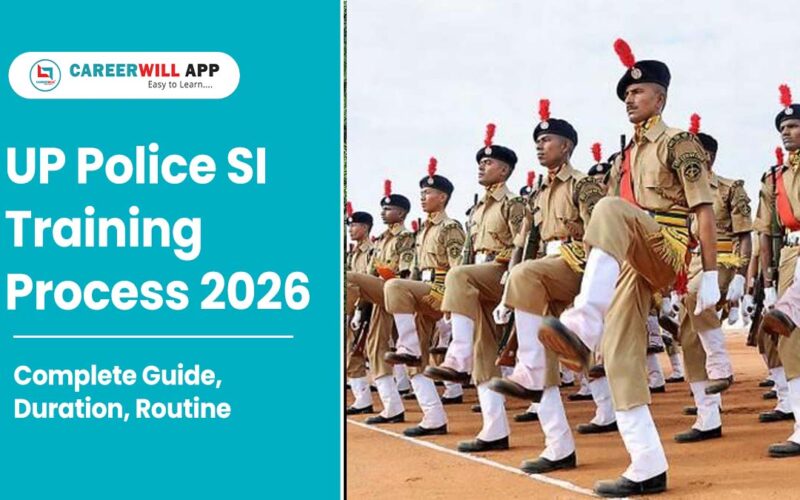
In this blog, we will explain the complete UP POLICE SI TRAINING PROCESS in a clear and structured manner so that selected candidates understand what happens after final selection.
Becoming a Sub-Inspector is not just about clearing the written exam and physical tests. The real preparation begins during training. The UP POLICE SI TRAINING phase is where candidates are shaped into field-ready officers capable of handling investigations, maintaining law and order, leading teams, and making critical decisions under pressure.
Unlike constable-level training, SI training focuses more on leadership, legal authority, investigation procedures, and operational command. It is designed to build:
• Strong legal knowledge
• Investigation and case-handling skills
• Physical endurance and discipline
• Tactical and weapons proficiency
• Leadership and administrative capability
If you are preparing for SI recruitment or have recently been selected, this guide will help you understand the structure, duration, routine, and responsibilities involved in the UP POLICE SI TRAINING PROCESS and what to expect during this important phase of your career.
UP POLICE SI TRAINING PROCESS – Detailed Overview Chart
Below is a structured and more detailed chart explaining each stage of the UP POLICE SI TRAINING PROCESS, from joining to final district posting. This overview clearly shows what happens at every level of SI training.
UP POLICE SI TRAINING PROCESS – Detailed Chart
| Training Stage | Primary Focus Area | Detailed Activities & Learning Outcomes |
| 1. Reporting & Induction | Administrative Formalities & Orientation | Final document verification, medical re-check (if required), uniform measurement, kit distribution, hostel allotment, introduction to training schedule, briefing on discipline rules and academy regulations |
| 2. Legal & Classroom Training | Law, Procedures & Theoretical Knowledge | Detailed study of IPC, CrPC, Indian Evidence Act, Police Manual, Constitution, Human Rights, cyber laws basics, case diary writing, FIR drafting, court procedures, departmental hierarchy and responsibilities |
| 3. Physical & Drill Training | Fitness, Stamina & Command Presence | Daily PT sessions, long-distance running, parade drills, formation practice, saluting discipline, obstacle course training, endurance building, posture correction, leadership command exercises |
| 4. Investigation Skills Training | Criminal Investigation & Documentation | Crime scene management, evidence collection and preservation, statement recording, interrogation techniques, arrest procedures, charge sheet preparation, case file documentation, coordination with prosecution |
| 5. Weapons & Tactical Training | Firearms & Operational Readiness | Introduction to service weapons, firearm safety protocols, firing range practice, weapon maintenance, riot control drills, crowd management techniques, self-defense training, use-of-force guidelines |
| 6. Field & Practical Attachment | Real-World Policing Exposure | Supervised police station attachment, handling real case files, assisting in investigations, traffic control practice, public interaction management, emergency response simulation exercises |
| 7. Internal Assessments & Evaluation | Performance Monitoring | Written examinations on legal subjects, physical fitness tests, firing accuracy tests, discipline record review, leadership evaluation, practical investigation assessment |
| 8. Passing Out Parade | Training Completion Ceremony | Final inspection by senior officers, parade demonstration, oath-taking ceremony, official confirmation of successful training completion |
| 9. District Posting & Probation | Field Deployment & Practical Duty | Official appointment order, posting to assigned district, reporting to Superintendent of Police, probation period begins, independent duty responsibilities assigned |
1. Reporting & Induction
The Reporting & Induction stage marks the official beginning of the UP POLICE SI TRAINING PROCESS. This is the phase where selected candidates formally join the training academy and enter disciplined service life.
It is not just about arrival at the training centre. It sets the foundation for discipline, structure, and professional conduct that will continue throughout the training period.
Reporting & Induction
| Stage Component | Focus Area | Detailed Activities Conducted | Practical Outcome / Purpose |
| 1. Reporting at Training Centre | Official Joining Formalities | Reporting on scheduled date, attendance marking, batch allocation, verification of appointment letter | Official entry into training service and confirmation of joining |
| 2. Document Verification | Eligibility Reconfirmation | Re-check of educational certificates, identity proof, category certificate (if applicable), medical clearance confirmation | Ensures only eligible candidates proceed with training |
| 3. Medical Re-Examination (If Required) | Fitness Validation | Basic health screening, physical standard confirmation, eyesight verification | Confirms trainee meets required medical standards |
| 4. Uniform Measurement & Kit Distribution | Uniform Discipline | Measurement for uniform stitching, distribution of training kit, assignment of trainee ID number | Establishes uniform code and professional identity |
| 5. Hostel Allotment & Accommodation Setup | Residential Arrangement | Room allotment, mess facility introduction, explanation of hostel rules, daily schedule briefing | Smooth transition into disciplined residential training life |
| 6. Orientation & Training Briefing | Rules & Expectations | Introduction to academy structure, explanation of training modules, discipline guidelines, performance evaluation system | Sets clear expectations and mental preparation for rigorous training |
2. Legal & Classroom Training
Legal and classroom instruction is one of the most important phases of the UP POLICE SI TRAINING PROCESS. Since a Sub-Inspector acts as an Investigating Officer, strong legal understanding is mandatory. This stage prepares trainees to handle cases independently, follow correct procedures, and ensure lawful policing.
Unlike basic-level training, SI classroom sessions are detailed, case-oriented, and responsibility-focused.
Legal & Classroom Training
| Training Component | Focus Area | Detailed Topics & Activities Covered | Practical Outcome / Purpose |
| 1. Indian Penal Code (IPC) | Criminal Law Understanding | Study of major criminal sections, classification of offences, punishment provisions, application of relevant IPC sections in case scenarios | Enables correct legal classification of crimes during investigation |
| 2. Criminal Procedure Code (CrPC) | Procedural Law & Investigation Process | FIR registration rules, arrest procedures, search & seizure guidelines, remand process, charge sheet filing, court procedures | Ensures lawful investigation and procedural compliance |
| 3. Indian Evidence Act | Evidence Management | Types of evidence (oral, documentary, electronic), admissibility rules, chain of custody, witness examination basics | Strengthens case quality and court sustainability |
| 4. Police Manual & Departmental Rules | Administrative & Internal Procedures | Uttar Pradesh Police Manual study, reporting hierarchy, case diary writing, documentation standards, departmental conduct rules | Builds administrative discipline and documentation accuracy |
| 5. Human Rights & Constitutional Provisions | Ethical & Lawful Policing | Fundamental rights awareness, custodial conduct, use of force guidelines, gender sensitivity, public interaction protocols | Promotes responsible and legally compliant policing |
| 6. Cybercrime & Modern Policing Basics | Emerging Crime Handling | Introduction to cyber offences, digital evidence basics, online fraud investigation fundamentals | Prepares SI trainees for modern crime challenges |
3. Physical & Drill Training
Physical & Drill Training is a core component of the UP POLICE SI TRAINING PROCESS. Even though a Sub-Inspector holds a leadership role, physical fitness and command presence are essential. This phase builds stamina, discipline, coordination, and the ability to lead from the front.
Training is structured, demanding, and performance-based.
Physical & Drill Training
| Training Component | Focus Area | Detailed Activities Conducted | Practical Outcome / Purpose |
| 1. Daily Physical Training (PT) | Strength & Endurance Building | Warm-up exercises, stretching, push-ups, sit-ups, core workouts, flexibility training | Improves overall fitness and injury resistance |
| 2. Running & Stamina Development | Cardiovascular Fitness | Timed long-distance runs, sprint drills, interval training, breathing control practice | Enhances stamina required for field operations |
| 3. Parade & Command Drill | Discipline & Leadership Presence | Marching in formation, saluting drills, command voice practice, squad coordination exercises | Builds confidence, discipline, and officer-like command |
| 4. Obstacle & Agility Training | Physical Readiness | Wall climbing, rope climbing, crawling drills, balance exercises, obstacle course completion | Develops agility, quick response ability, and coordination |
| 5. Fitness Standards Monitoring | Performance Evaluation | Timed running tests, BMI checks, chest expansion standards (for males), stamina assessment | Ensures trainees maintain required physical benchmarks |
| 6. Leadership Through Drill | Officer-Level Discipline | Leading parade squads, giving drill commands, inspection preparation | Prepares SI trainees to lead personnel confidently in field situations |
4. Investigation Skills
Below is a structured and detailed chart explaining the Investigation Skills Training phase under the UP POLICE SI TRAINING PROCESS. This chart clearly shows what SI trainees learn and how each skill prepares them for real policing duties.
Investigation Skills Training
| Training Component | Core Focus Area | What SI Trainees Learn & Practice | Practical Outcome |
| 1. FIR & Case Registration | Legal Initiation of Investigation | Proper FIR drafting, identifying correct IPC sections, classification of offences, complainant statement recording, legal documentation accuracy | Strong legal foundation for investigation and reduced procedural errors |
| 2. Crime Scene Management | Scene Protection & Evidence Safety | Securing crime scene, preventing contamination, preparing site plans, photography basics, coordinating with forensic teams | Evidence integrity maintained for court proceedings |
| 3. Evidence Collection & Preservation | Handling Physical & Digital Evidence | Collecting physical, documentary, and electronic evidence, sealing procedures, maintaining chain of custody, documentation of seized materials | Ensures admissibility of evidence in court |
| 4. Interrogation & Statement Recording | Legal Questioning Techniques | Recording witness statements, suspect interrogation within legal limits, understanding rights of accused, preparing arrest memos | Lawful and defensible investigation process |
| 5. Case Diary & Documentation | Investigation Record Management | Writing daily case diaries, preparing charge sheets, maintaining investigation files, coordination with prosecution | Organized case presentation and legal clarity |
| 6. Court Procedure & Trial Preparation | Judicial Process Understanding | Filing final reports, presenting evidence, understanding court hierarchy, responding to cross-examination | Increased conviction rate through proper case handling |
| 7. Field Attachment Practice | Real Case Exposure | Assisting senior officers in real investigations, observing live case handling, applying classroom knowledge in police station environment | Practical readiness for independent investigation duties |
5. Weapons & Tactical Training
Below is a structured and detailed chart explaining the Weapons & Tactical Training phase under the UP POLICE SI TRAINING PROCESS. This stage prepares SI trainees to handle firearms responsibly and manage high-risk law and order situations with confidence and discipline.
Weapons & Tactical Training
| Training Component | Focus Area | Detailed Activities & Topics Covered | Practical Outcome / Purpose |
| 1. Introduction to Service Weapons | Weapon Familiarization | Understanding types of police-issued firearms, weapon parts identification, loading and unloading procedures, weapon safety rules | Builds foundational knowledge and safe handling discipline |
| 2. Firing Practice & Range Training | Accuracy & Control | Target shooting practice, controlled firing techniques, stance and grip correction, breathing coordination, live range drills | Improves accuracy, control, and confidence in weapon use |
| 3. Weapon Maintenance & Safety Protocols | Responsible Weapon Handling | Cleaning and maintenance procedures, safe storage guidelines, transport protocols, trigger discipline training | Prevents accidental discharge and ensures operational readiness |
| 4. Riot & Crowd Control Tactics | Law & Order Management | Shield handling, baton techniques, formation drills, crowd dispersal strategies, non-lethal force usage guidelines | Prepares SI officers to manage public disturbances effectively |
| 5. Self-Defense & Combat Skills | Personal Safety & Tactical Response | Unarmed combat basics, defensive tactics, suspect restraint techniques, situational awareness training | Enhances officer safety during field operations |
| 6. Tactical Scenario Simulation | Real-World Response Practice | Mock drills, emergency response simulation, coordinated team exercises, decision-making under pressure | Develops quick judgment and operational leadership skills |
| 7. Performance Assessment | Skill Evaluation | Firing accuracy tests, tactical response evaluation, discipline review, safety compliance checks | Ensures trainees meet required operational standards |
6. Field & Practical Attachment
Below is a structured and detailed chart explaining the Field & Practical Attachment phase under the UP POLICE SI TRAINING PROCESS. This stage bridges classroom learning and real-world policing by giving SI trainees hands-on exposure in actual police environments.
Field & Practical Attachment
| Training Component | Focus Area | Detailed Activities & Exposure | Practical Outcome / Purpose |
| 1. Police Station Attachment | Real Station Functioning | Reporting to assigned police station, observing daily operations, understanding station hierarchy, learning duty allocation system | Familiarity with real administrative and operational workflow |
| 2. Case Handling Observation | Live Investigation Exposure | Assisting senior officers in ongoing cases, reviewing FIRs and case diaries, observing interrogation and evidence collection | Practical understanding of investigation process |
| 3. Public Interaction & Law & Order Duty | Community Policing | Participating in patrolling, traffic control, public complaint handling, crowd management during events | Builds confidence in handling public and maintaining order |
| 4. Documentation Practice | Record & Report Preparation | Writing daily reports, preparing case summaries, maintaining station records, assisting in charge sheet drafting | Improves accuracy and professional documentation skills |
| 5. Court Visit Exposure | Judicial Coordination | Attending court hearings with senior officers, understanding prosecution coordination, observing evidence presentation | Enhances understanding of trial procedures |
| 6. Emergency Response Practice | Quick Action Readiness | Responding to mock emergency calls, participating in simulation exercises, learning rapid deployment methods | Develops decision-making ability under pressure |
| 7. Performance Feedback & Evaluation | Practical Assessment | Feedback from supervising officers, evaluation of discipline and work efficiency, improvement recommendations | Ensures readiness for independent duty after training |
7. Discipline, Leadership & Personality Development
Below is a structured and detailed chart explaining the Discipline, Leadership and Personality Development phase under the UP POLICE SI TRAINING PROCESS. This stage focuses on shaping Sub-Inspectors into confident leaders capable of commanding teams and handling high-pressure situations.
Discipline, Leadership & Personality Development
| Training Component | Focus Area | Activities & Development Methods | Practical Outcome / Purpose |
| 1. Discipline & Code of Conduct | Professional Behaviour | Strict attendance rules, punctuality enforcement, uniform inspection, adherence to academy regulations, reporting discipline | Builds officer-level professionalism and accountability |
| 2. Parade Command & Leadership Practice | Command Presence | Leading parade squads, giving drill commands, supervising formations, inspection participation | Develops confidence, authority, and leadership voice |
| 3. Decision-Making Under Pressure | Mental Strength | Scenario-based exercises, emergency simulations, crisis response drills | Enhances judgment and calm response in real situations |
| 4. Communication Skills Training | Effective Interaction | Public speaking practice, report presentation, briefing seniors, handling public complaints | Improves clarity, confidence, and professional communication |
| 5. Team Management & Supervision | Leadership Development | Managing group tasks, supervising junior staff during training exercises, conflict resolution practice | Prepares SI to lead constables and manage station staff |
| 6. Stress & Emotional Control | Mental Stability | Discipline sessions, structured routine adherence, counseling support if needed | Builds emotional resilience required for policing |
| 7. Personality Grooming & Conduct Evaluation | Overall Officer Development | Behaviour monitoring, etiquette training, interaction standards, integrity assessment | Shapes a balanced, responsible, and respected police officer |
8. Posting and Responsibilities After Training
Below is a structured and detailed chart explaining what happens after completion of the UP POLICE SI TRAINING PROCESS, including posting procedures and key responsibilities of a Sub-Inspector.
Posting & Responsibilities – Detailed Overview Chart
| Stage / Component | Focus Area | Activities & Duties Involved | Purpose / Outcome |
| 1. District Posting Order | Administrative Deployment | Issuance of official posting letter, district allocation based on departmental needs, reporting date announcement | Formal transition from trainee to active field officer |
| 2. Reporting to Superintendent of Police (SP) | Official Joining in District | Reporting at district headquarters, verification of posting order, assignment to specific police station/unit | Entry into operational service structure |
| 3. Police Station Assignment | Operational Allocation | Allotment of jurisdiction area, introduction to station staff, briefing on local crime pattern | Familiarity with ground-level responsibilities |
| 4. Probation Period | Performance Monitoring | Evaluation of investigation skills, discipline review, supervision by senior officers, confidential performance reports | Confirmation of permanent service status |
| 5. FIR Registration & Investigation Handling | Core Legal Responsibility | Registering FIRs, applying correct legal sections, leading investigations, and supervising evidence collection | Ensures lawful and effective criminal investigation |
| 6. Law & Order Maintenance | Field Supervision | Patrolling, crowd control, handling public disturbances, and coordinating during emergencies | Maintains peace and public safety in the jurisdiction |
| 7. Court & Documentation Duties | Judicial Coordination | Preparing charge sheets, maintaining case diaries, presenting evidence in court, and coordinating with the prosecution | Strengthens the legal prosecution process |
| 8. Team Leadership & Administration | Command Responsibility | Supervising constables and head constables, maintaining discipline, preparing reports, and managing station records | Develops leadership and administrative capability |
| 9. Public Interaction & Community Policing | Public Relations | Handling complaints, conducting public meetings, resolving disputes, and maintaining community trust | Builds a positive police-public relationship |
Final Conclusion
The UP POLICE SI TRAINING PROCESS is not just a routine program after selection. It is a complete transformation journey that turns selected candidates into disciplined, legally knowledgeable, and field-ready Sub-Inspectors. From reporting and induction to classroom learning, physical drills, investigation training, weapons handling, field attachment, internal evaluation, and finally the passing out parade, every stage has a clear purpose.
SI training goes beyond physical strength. It builds leadership ability, legal authority, decision-making skills, professional discipline, and operational confidence. Since a Sub-Inspector plays a crucial role in investigation and law enforcement, the training structure is designed to ensure that officers can independently handle cases, manage teams, and maintain law and order effectively.
By understanding the full UP POLICE SI TRAINING structure, aspirants can mentally prepare for what lies ahead, and selected candidates can approach training with clarity and focus. Successfully completing this training is not just about earning a posting. It marks the beginning of a responsible and respected career in the Uttar Pradesh Police force, with long-term growth, service, and leadership opportunities.